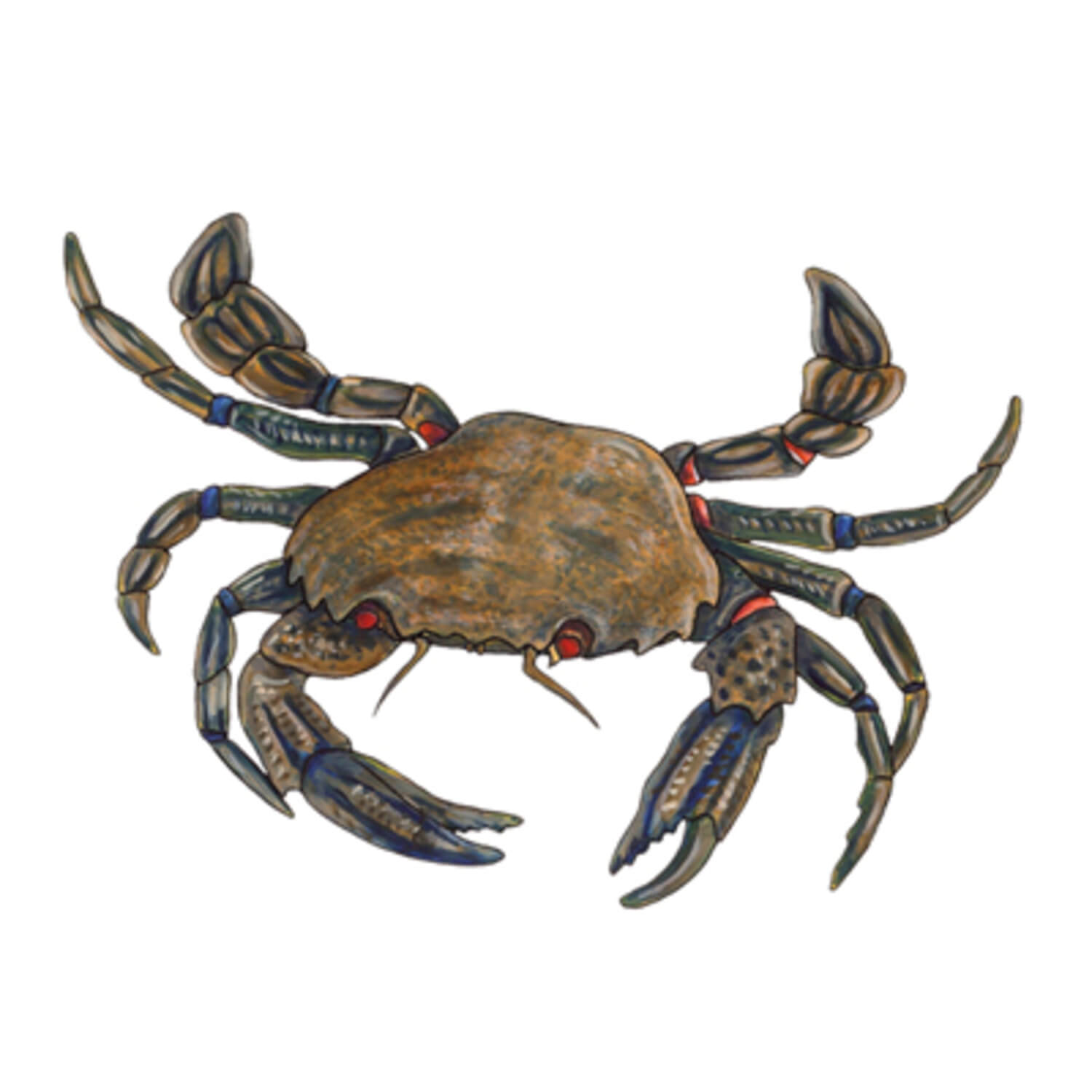

The velvet crab is a medium-sized species of crab found in British coastal waters. Depending on the background or interest, they can be called velvet swimming crabs, lady crabs, devil’s crabs, or ‘fighter crabs.’ The scientific name for velvet crab is Necora puber.
Many people have considered this swimming crab a pet species for years. Due to their dietary value, these crabs are currently deemed one of the most important commercially viable export species in Ireland, the United Kingdom, and many other places.
This article provides up-to-date information about the velvet swimming crab. It has been designed to empower every reader who intends to understand the value of this crab and gain useful insights on the best ways to protect it from serious threats like habitat destruction, overfishing, and ocean acidity.
Appearance
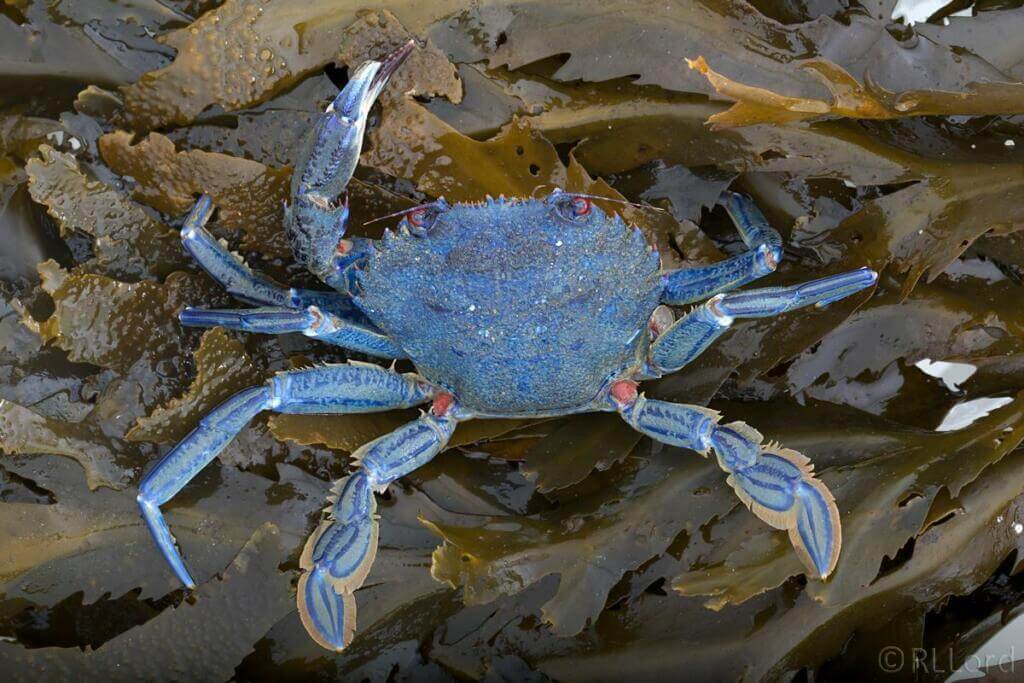
The name ‘velvet swimming crab’ is indicative of this animal’s appearance. The short hairs that cover the crab give them a velvet appearance and make them amazingly soft to the touch, like the woven, tufted fabric known as velvet.
They have five pairs of legs, with the front pair modified into powerful claws tipped with black. These claws are used for defense, feeding, and attracting mates.
Like other species of swimming crabs, the rear-most legs of these velvet-like sea creatures are flattened exactly like paddles, empowering them to swim against tides and currents. Because of these well-adapted rear-most legs, velvet crabs have above-average speed underwater, meaning they are aggressive at catching various swimming prey.
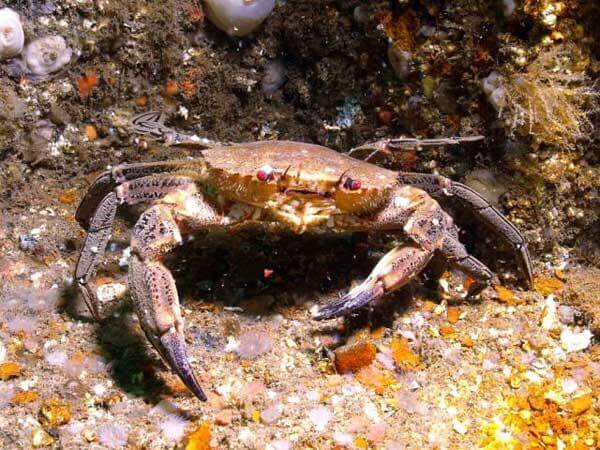
Many experts think this aggressiveness has earned it the common nickname, ‘the devil’s crab.’
They possess distinctive bright red eyes. Their body parts are usually multicolored, ranging from brown to green. An adult velvet swimming crab is between 8cm and 9 cm across the shell.
Habitat
Velvet swimming crabs are available in large numbers throughout European waters. They are found in Ireland and UK coastlines, particularly in places where there are rocky and broken grounds.
They are also found along the northeastern Atlantic coast from Norway to Mauritania, including the Mediterranean Sea.
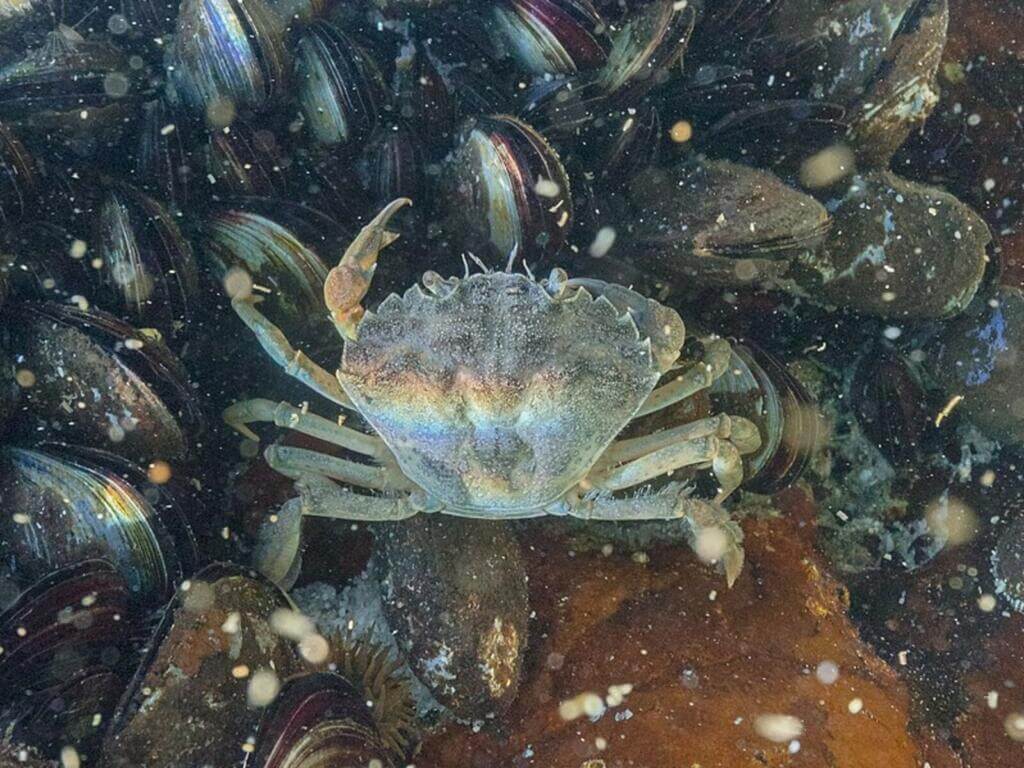
They prefer rocky shores and shallow waters, often hiding in crevices, under rocks, or amongst seaweed during the day. They are typically found from the lower shore down to depths of around 50 meters.
Diet
Velvet crabs are opportunistic omnivores, feeding on a variety of prey. Their diet includes small crustaceans, mollusks, worms, and even dead fish.
The rear-most legs enable the crab to catch swimming prey. Some of these prey are fish and prawns. At the same time, velvet crabs use these legs to munch on sea snails, clams, worms, and other easier catches.
They also supplement their diet with algae and seaweed.
Other than that, these crabs can feed on dead animals whenever they don’t catch their prey.
Reproduction
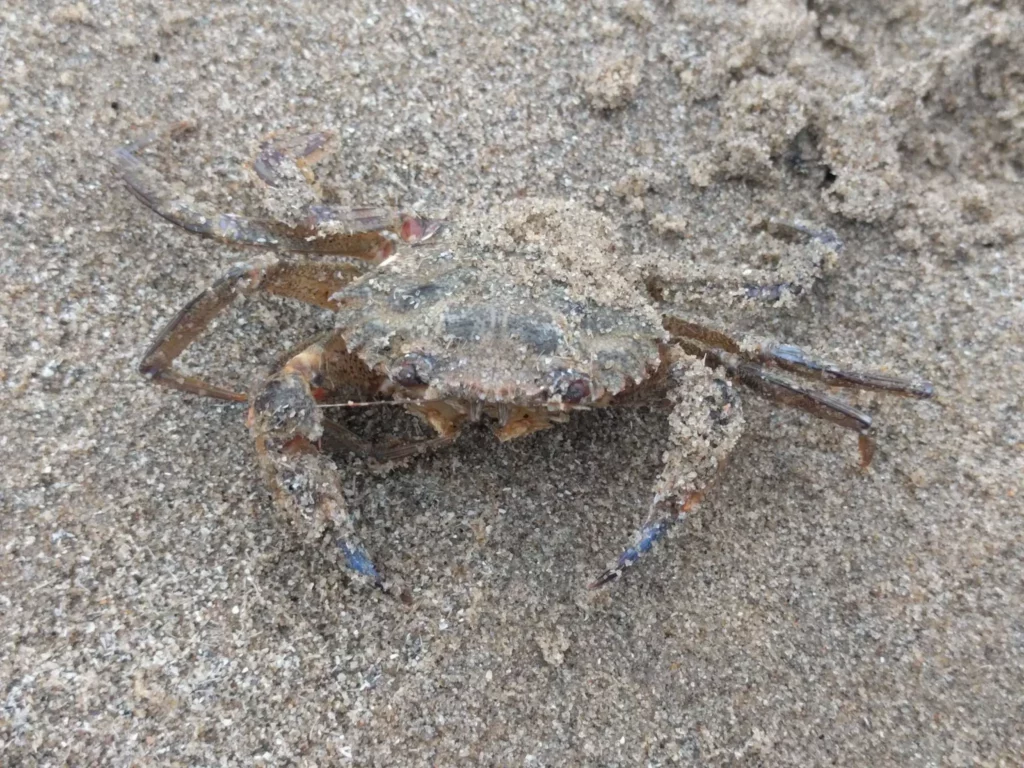
Mating occurs primarily in the spring and summer months. Female velvet crabs molt (shed their exoskeleton) before mating, allowing the male to transfer sperm.
Females carry their fertilized eggs under their abdomen for several months. A female velvet swimming scrap carries its fertilized eggs around to protect them from hungry predators.
Research shows that a velvet crab can reproduce after its first year. Once hatched, the larvae are planktonic, drifting in the water column and undergoing several molts before settling on the seabed and developing into juvenile crabs.
The young crabs can live for between four and five years.
Threats
Due to velvet crabs’ commercial value, some anglers have overfished them. Most use pot and trap fishing methods to capture this species in unstainable numbers over a short period.
There are concerns that UK, France, and Spain fishers have perfected the art of using these unstainable fishing techniques.
Anglers sometimes mistakenly catch the velvet crab. Some of them still view them as bait-stealing pets. So, they kill them without any valid reason.
A few enlightened fishers return young velvet swimming crabs un-harmed. Others take the males and return the females to replenish their stock. At the same time, some anglers only have mercy on females carrying eggs. These actions should be encouraged, and the anglers should be appreciated.
However, we need to do more than that. The increasing ocean acidification destroys the red-eyed crab’s exoskeleton (external skeleton). This shows that the ocean needs more attention.
5 More Facts About Velvet Crab
- The velvet swimming crab is not as soft as the name implies in every aspect. Its aggressive behavior is thought to have resulted in a funny nickname, the devil’s crab.
- The velvet crab is also the largest swimming crab found along the UK coastline.
- The red-eyed crab is distinguishable from other crab species by its rear flat paddle-like flippers that aid in swimming, the color of the eyes, and the body covered with hair, giving it a velvet appearance.
- These swimming crabs are small but tasty.
- The velvet swimming crab’s shell is 10 cm, but the body is 8 and 9 cm across the shell.
- Female velvet crabs carry fertilized eggs all the time to protect them from hungry predators.
FAQs
How long do velvet crabs live?
Velvet crabs live for between four and five years in the wild. The female can reproduce up to 250,000 eggs per season and protect them to prevent predators from eating them. So, one velvet swimming crab can release at least one million offspring in her lifetime. Her offspring begins to reproduce about one year later, and the circle continues.
How are microplastics a threat to velvet crabs?
Due to widespread contamination, velvet crabs ingest microplastics in large numbers every day. This causes a serious problem because these pollutants are associated with chemicals that poison the environment. So, many velvet swimming crabs that consume them are at risk of suffering from terminal diseases, which in turn present a direct threat to humans who consume the affected animals.
Can you eat a velvet crab?
You can eat a velvet crab even though it’s more difficult to prepare than the larger brown crab. Other than the preparation process, its meat is delicious. Fishers in Northern Ireland, Scotland, and Cornwall catch them alongside the brown crabs. However, in some places, fishers specifically target this crab species, giving cooks plenty of options in the kitchen.
How can I conserve velvet crabs?
You can conserve velvet swimming crabs using sustainable fishing practices, like pot fishing. If you capture young or female velvet crabs, consider returning them to the sea unharmed. You should do the same if you unintentionally capture this crab species. At the same time, be sure you preserve the environment to limit ocean acidification, which harms the animal’s external skeleton.


